
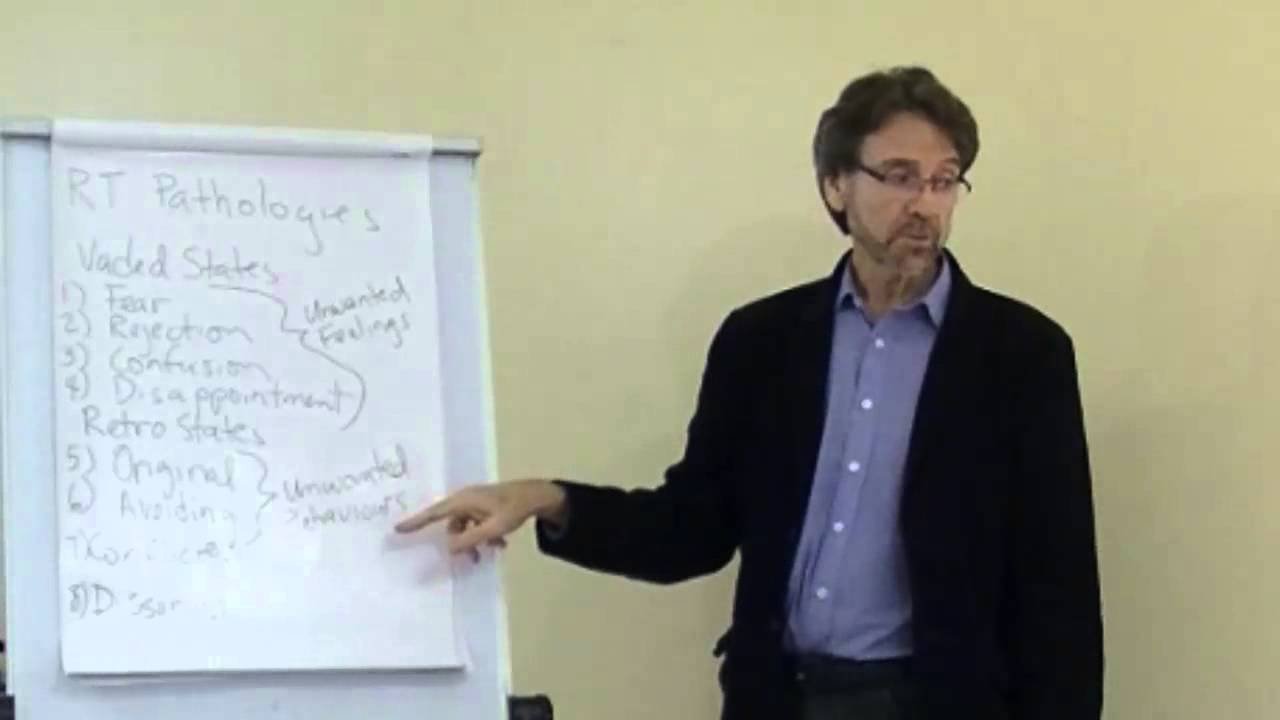
Who is Gordon Emmerson, PhD?
Gordon Emmerson, PhD, the founder of Resource Therapy (RT). His career has included psychology, university teaching, clinical work, research, writing and international training. He is the author of several books on Resource Therapy and Ego State Therapy and has taught his work internationally.
Gordon is recognised by Resource Therapy International for his significant historical contribution as the founder of Resource Therapy. He does not hold a current governance role within RTI. Resource Therapy International is governed by its President and the Executive Committee. Operating under its current professional, ethical, training and membership standards.
With decades of clinical experience and a background in behavioural science, statistics, and ego-state therapy, Emmerson developed Resource Therapy as an advanced evolution of Ego State Therapy.
What is Resource Therapy, and why did Gordon Emmerson create it?
Resource Therapy (RT) is a complete personality theory and practical clinical model that addresses the root causes of common psychological issues, including anxiety, depression, PTSD, addictions, eating disorders, OCD, attachment wounds, and relational difficulties.
It uses 15 precise Treatment Actions grounded in memory reconsolidation to locate the “Vaded” state driving symptoms, release stored pain, empower the part, and update outdated emotional learnings.
Unlike traditional talk therapy, RT enables direct, compassionate dialogue with the specific “Resource State” (personality part) holding the emotional pain, fear, or maladaptive pattern without requiring hypnosis.
Emmerson created RT to give therapists a clear, repeatable, client-empowering framework that delivers results more efficiently than insight-oriented or purely cognitive approaches.
Academic and Professional Background
- Honorary Fellow in the School of Psychology at Victoria University, Melbourne
- Pioneer in applying ego-state and parts-based techniques to addiction, depression, trauma, and other high-prevalence conditionss
Today, Resource Therapy is taught and practiced in more than 15 countries. RTI connects psychologists, psychotherapists, counsellors, trauma specialists, and coaches worldwide who value its clarity, compassion, and effectiveness.
His work established the foundations of Resource Therapy, which is now supported internationally through RTI’s training standards, membership community and Executive Committee.
Why therapists and clients choose Resource Therapy
- Fast and targeted: Works directly with the part that needs change, often producing noticeable shifts in a single session.
- Trauma-informed and non-pathologizing: Focuses on empowering Resource States rather than labeling clients.
- Practical for real-world practice: Offers diagnostic clarity and session-by-session protocols for fear-based trauma, attachment wounds, and more.
Whether you are a mental health professional seeking advanced parts-work skills or someone exploring effective trauma-informed therapy options, Resource Therapy offers a proven path to deeper healing and internal harmony.
Selected references
- Emmerson, G. J., & Farmer, K. (1996). Ego-state therapy and menstrual migraine. Australian Journal of Clinical Hypnosis and Hypnotherapy, 31(2), 121–129.
- Christensen, C. A., Barabasz, A., & Barabasz, M. (2013). Efficacy of abreactive ego-state therapy for PTSD: Trauma resolution, depression, and anxiety. Journal of EMDR Practice and Research, 7(2), 65–74.
- Watkins, J. G., & Watkins, H. H. (1997). Ego States: Theory and Therapy. W. W. Norton & Company.
Let’s learn from Gordon of RT History.
In this 2015 video, Gordon shares the origins of RT from Freud, Federn, Jack Watkins, and to the present day. Resource Therapy key differences and updates from Ego State Therapy.
Resource Therapy Overview
Resource Therapy is a structured, brief psychodynamic trauma-informed parts model that enables direct dialogue with the state that holds the issue. It provides:
- A diagnostic map of normal, vaded, retro, conflicted, and dissonant states
- 15 Treatment Actions (e.g., Vivify Specific, Bridging, Expression, Anchoring)
- Protocols designed for safety, precision, and durable change
RT is a standalone therapy. Once the Clinical Training is completed, it complements and integrates with modalities such as EMDR, ACT, DBR, and IFS while retaining a distinct, state-specific language and method.
Publications and professional texts
- Ego State Therapy (2003)
- Advanced Techniques in Therapeutic Counselling (2006)
- Healthy Parts, Happy Self (2012)
- Resource Therapy Primer (2014)
- Resource Therapy (2014)
- Therapist Gold: Clinical Strategies for Parts Therapy and Emotional Healing Co Author Christiane Essing (2025)
Explore RTI training & certification
Relevance for Health Professionals
For clinicians addressing trauma, mood and anxiety disorders, behavioural issues, relational ruptures, or internal conflict, Resource Therapy offers:
- A clear, state-based map for case formulation
- Evidence-informed, trauma-aware protocols
- Direct access to wounded states for targeted healing
- A client-led, strengths-based approach